Development 08.10.2026
08.10.2026 SpeedyGo: One plugin to make your WordPress website faster
 Corvexa: AI that turn more website visitors into qualified leads.
 Energy
 Oil and gas
 Transportation
 E-commerce
 Healthcare
 Real Estate
 Fintech
 Manufacturing
 Education
 Agriculture
 Travel
 Cyber Security
 Crypto
 Law and Order
 Entertainment
 Hospitality
 Logistics
 Non-profit
 Digital Industry
 Venture Capital
A Quick Guide on the Right Software Development Approach for Enterprises in 2023

 08/10/2026


| Quick summary
Your app idea may be great. But the mobile development company you pick decides whether it ever reaches the app store, and whether people keep using it. This buyer’s guide shows how to compare companies, understand costs, ask smart questions, and decide if a dedicated mobile app development team is right for you.
|
Here is a story we hear often. A founder hires the cheapest team they can find. The demo looks good. Months later, the app crashes on half of all Android phones, the store rejects it twice, and the code belongs to someone else.
It is not bad luck. It is what happens when a company is chosen on price and promises instead of proof.
A mobile app is a long relationship, not a one-time purchase. It needs design, building, testing, store approval, and years of updates. So the right partner matters as much as the idea.
This guide gives you a simple way to choose. No jargon, just clear steps you can follow today.
Mobile is where your customers are. And your customers use two main systems. According to StatCounter, Android has about 69% of worldwide mobile usage and iOS about 31%

Worldwide mobile operating system share mid 2026
That split changes by country. India leans heavily towards Android, while the United States leans towards iPhone. A good mobile development company asks where your users live before it suggests a platform. If they skip that question, be careful.
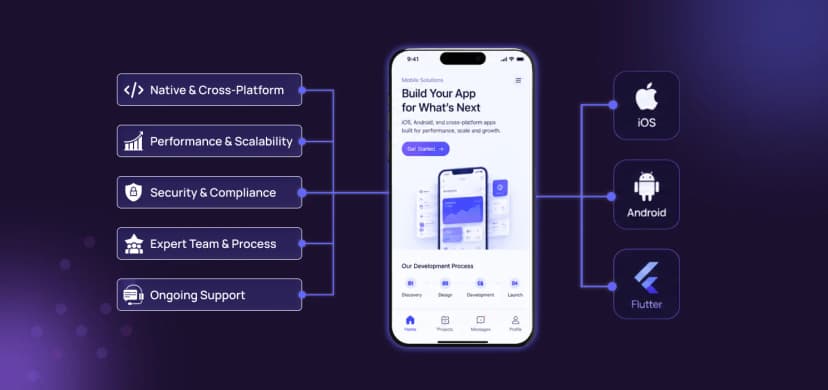
A strong mobile application development company covers the full journey, not just coding. Here is what to expect from solid mobile development services.
| Note
Ask whether design, backend, and testing are included in the quote. Some companies only quote the front-end screens and leave the rest as extras. |
Before comparing companies, understand the three main ways to build an app. This choice affects cost, speed, and quality

Native, cross platform, or PWA

Facto of Native, cross platform, or PWA
Popular cross-platform tools include Flutter and React Native. Both let one team build for iOS and Android together. Our post on iOS app development: native vs cross-platform goes deeper, and building future-proof apps with hybrid frameworks covers the hybrid route. Code and Core also offers cross-platform development and PWA development.
| Tip
A good company will recommend one approach and explain why. If they push native for everything, or cross-platform for everything, without asking about your app, that is a sign they sell what they know, not what you need. |
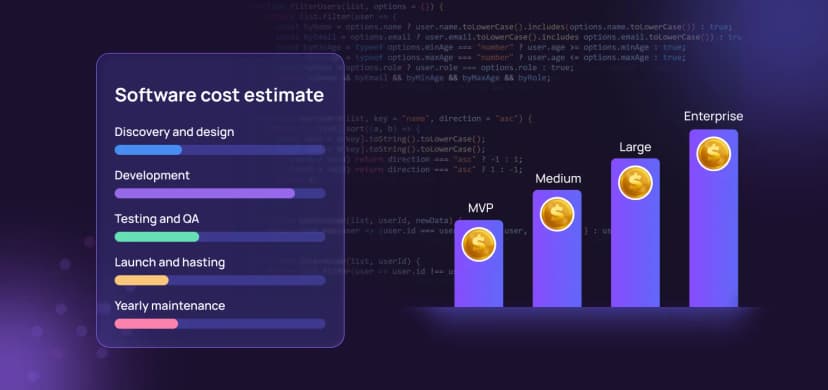
Prices vary widely. The GoodFirms 2026 survey of software companies found that 78.2% of mobile app companies charge up to $50,000 for MVPs and simple apps. Only a small group handles the most complex builds.

How much does a mobile app development company charge
More than half of the app companies (56.3%) charged $5,000 to $50,000 for simple apps. Highly complex apps ranged from $100,000 to $300,000 or more. The survey also notes that scope changes often add 10% to 25% to the final cost, and yearly maintenance runs around 10% to 20%.
So when you compare quotes from a mobile app development company, compare what is included, not only the total. Cheaper quotes often leave out testing, backend, or store launch.

Code and Core

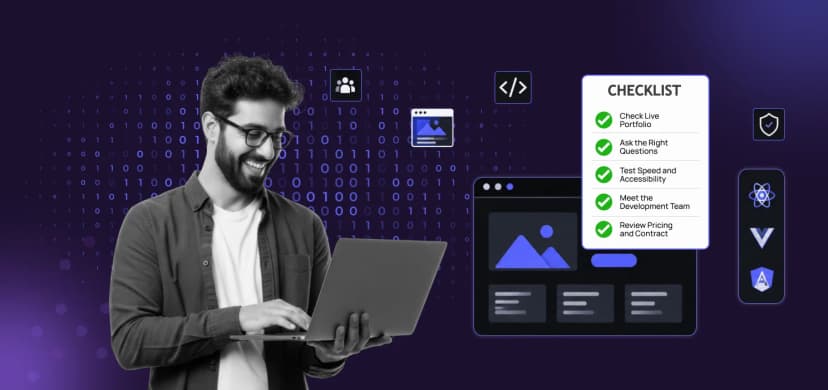
A six step path to choosing the right mobile development company
Step 1: Define your app
Write down who it is for, the three most important features, which platforms you need first, and your budget range. One page is enough.
Step 2: Shortlist three to five companies
Use reviews, referrals, and platforms like Clutch and GoodFirms. Fewer than three limits your choice. More than five makes comparing hard.
Step 3: Test their live apps
This is the single best check. Download two or three apps they built. Use them on your own phone. Do they feel smooth? Do they crash? When was the last update?
Step 4: Interview the team
Talk to the people who will build your app, not only the salesperson. Use the questions below.
Step 5: Run a paid pilot
A small, paid first sprint (one or two weeks) shows how the team works. You see real code, real communication, and real deadlines before committing.
Step 6: Sign with ownership in writing
You should own the source code, designs, and store accounts. Get this in the contract, not in a promise.
Timing depends on size and complexity. In the GoodFirms survey of software projects, small MVPs usually took one to three months, medium projects three to six months, and large projects six to twelve months.
A realistic mobile timeline has five stages: discovery and planning, design, development in short sprints, testing and store approval, and launch with early support. Be careful with any company that promises a full-featured app in a few weeks. Speed is possible with a tight MVP, but not by skipping testing.
If you need speed without losing quality, start with a focused first version. Our post on the hidden benefits of rapid app prototyping shows how prototypes save weeks of rework, and our MVP development service is built around that idea.
A portfolio page is a brochure. Live apps are proof. Check these things.
You can also browse our portfolio to see how we present projects, with the type of work, location, and results listed for each one.
About the team
About the process
About launch and ownership
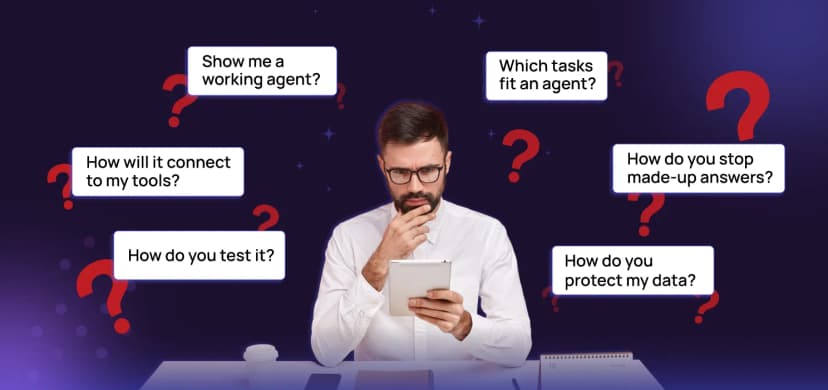
Apps hold personal data, and mistakes can cost trust and money. Before you sign, ask these questions.
A professional team answers these without hesitation. If the answers sound vague, treat that as a warning.
A dedicated mobile app development team works only on your product for an agreed period. It acts like part of your company, but you do not have to hire each person yourself.

When does a dedicated mobile app development team make sense
This model works best when:
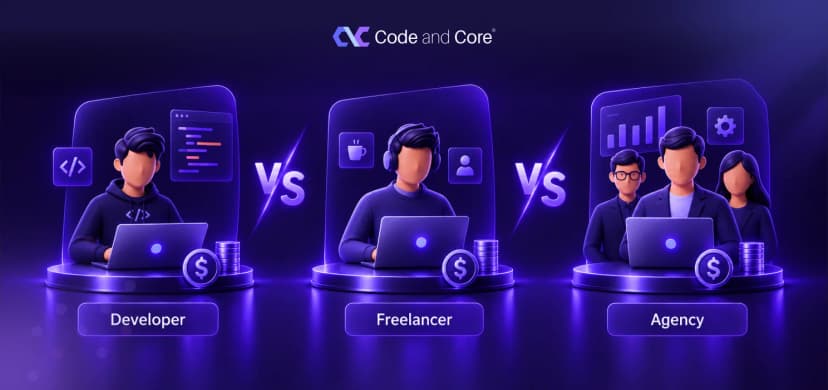
It is a popular choice. In the GoodFirms survey, 59.4% of software companies offered dedicated team (retainer) pricing. For a one-time, well-defined app, project-based work may be cheaper. Our post on dedicated teams vs project-based hiring compares both, and our dedicated team service shows how it works with us. For hiring options in general, see dedicated developer vs freelancer vs agency.
Many first-time founders are surprised: Apple and Google review every app before it goes live. They check privacy, safety, performance, and design rules.

Will the company get your app approved in the app stores
Read the rules yourself. Apple publishes its App Store Review Guidelines, and Google publishes its Developer Program Policies. A good mobile development company knows both well and plans for them from the start, so launch day is not a surprise.
| Did you know?
Many rejections come from simple things: a missing privacy policy, broken links, or a reviewer who cannot log in because no test account was supplied. Experienced teams prepare these in advance. |
Example scenario. Aarav owns three fitness studios and wants a booking app. He talks to two companies.
Company A shares a slide deck with screenshots. The sales manager quotes a fixed price after ten minutes and says there is no need for a pilot.
Company B shares links to three live apps. It asks about his members, suggests a cross-platform first release, lists what is and is not included, and offers a two-week paid pilot.
Aarav downloads Company B’s apps. They run smoothly and show recent updates. After the pilot, he signs a contract that states he owns the code. Same budget, much lower risk.
Launch day is the starting line. Phones get new software versions every year. Stores update their rules. Users find bugs and ask for new features.
Plan for ongoing care: bug fixes, operating system updates, security patches, and small improvements. As noted earlier, yearly upkeep often runs around 10% to 20% of the build cost. Choose a company that offers clear support plans, and read our guide on long-term success with maintenance to see why steady care protects your investment.
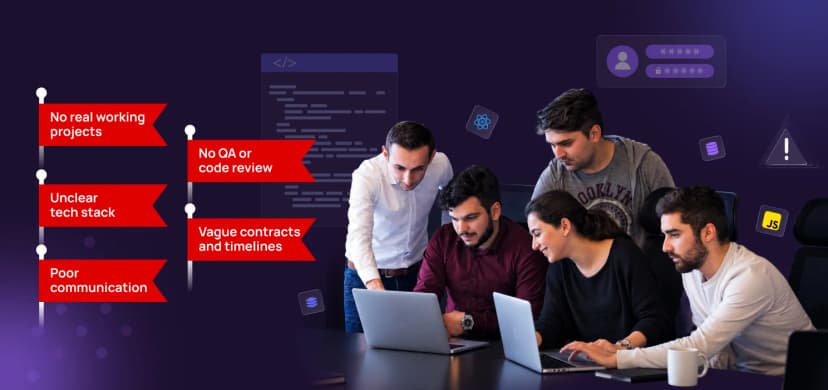
Our article on red flags before you hire a development team covers more warning signs.
Code and Core is an ISO 9001 certified studio that has served 500+ clients across 25+ countries since 2015. We offer mobile development, cross-platform and PWA services, and flexible hiring from 40 to 160 hours a month, as well as full dedicated teams. Every project can start under an NDA, and we follow a five-phase approach: discovery, design, development, deployment, and delivery.
Most important, we treat your app as our own. If you would like a second opinion on a quote you already have, we are happy to review it with you.

Code and Core
Choosing a mobile development company is mostly about trust you can test. Look at live apps, ask clear questions, run a small pilot, and put ownership in writing.
Do that, and you will avoid the most common regrets. Your app then has a real chance to be loved by users, not just launched.
How do I choose a mobile app development company?
Define your goals, shortlist three to five companies, test their live apps, ask about process and ownership, and run a small paid pilot before signing.
Should I build a native or cross-platform app?
Choose native for apps that need the best speed and deep device features. Choose cross-platform when you want iOS and Android from one codebase at lower cost and faster delivery.
How much does a mobile app cost in 2026?
In the GoodFirms 2026 survey, 56.3% of app companies charged between $5,000 and $50,000 for simple apps, while highly complex apps ran $100,000 to $300,000 or more.
What is a dedicated mobile app development team?
It is a team that works only on your product for an agreed period, often with developers, a designer, QA and a project manager, and acts like part of your company.
Who owns the app code after the project?
You should. Confirm in the contract that you own the source code, designs and developer accounts, and that the company hands everything over at the end.
Sources
StatCounter Global Stats, “Mobile Operating System Market Share Worldwide”: gs.statcounter.com
GoodFirms, “Custom Software Development Cost Survey 2026”: goodfirms.co
Apple, “App Store Review Guidelines”: developer.apple.com
Google Play, “Developer Program Policies”: play.google.com
Flutter: flutter.dev and React Native: reactnative.dev
Catch wind of the latest technologies, strategies, and information that are set to boost your business operation. We update frequently!