Development 20.10.2026
20.10.2026 SpeedyGo: One plugin to make your WordPress website faster
 Corvexa: AI that turn more website visitors into qualified leads.

 Energy
 Oil and gas
 Transportation
 E-commerce
 Healthcare
 Real Estate
 Fintech
 Manufacturing
 Education
 Agriculture
 Travel
 Cyber Security
 Crypto
 Law and Order
 Entertainment
 Hospitality
 Logistics
 Non-profit
 Digital Industry
 Venture Capital
A Quick Guide on the Right Software Development Approach for Enterprises in 2023


 26/05/2026


Stop overpaying for the cloud. Here’s how smart teams in 2026 are cutting waste, boosting efficiency, and spending only on what actually matters.

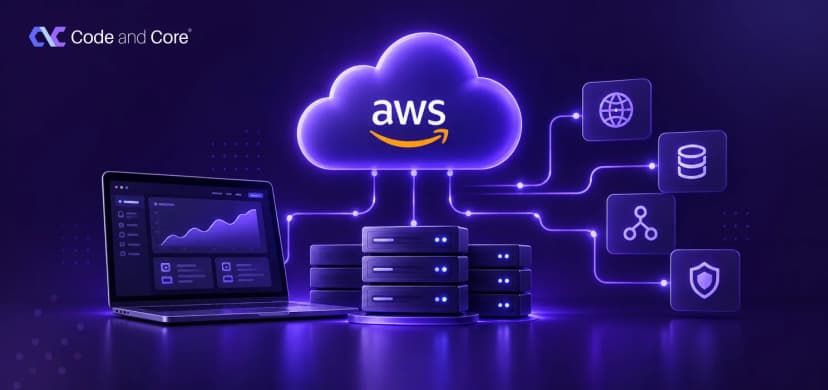
The cloud gives you speed, flexibility, and scale, but it can also drain your budget silently. Whether you’re running workloads on AWS, Azure, or GCP, cloud bills have a habit of growing faster than your business. The good news? Most of that spend is fixable.
| Note: Cloud cost optimization isn’t a one-time fix. It’s an ongoing discipline. Even mature teams revisit these practices every quarter as usage patterns evolve and new services get added. |

Before you optimize anything, you need a clear picture of your entire cloud spend. Most teams are surprised when they actually dig in. Use tools like AWS Cost Explorer, Azure Cost Management, or a third-party platform to get a single unified view across all accounts.
Over-provisioning is one of the most common (and costly) mistakes. A team spins up a large instance “just in case,” and it sits at 10% CPU for months. Right-sizing means matching your instance types and sizes to what your workloads actually need.
| Tip: Use cloud-native advisor tools (AWS Compute Optimizer, GCP Recommender) to get automated right-sizing suggestions. In high-growth environments, waste from over-provisioning can exceed 40% of total spend. |
If you know a workload will run 24/7 for the next year, don’t pay on-demand rates. Reserved Instances and Savings Plans let you commit upfront and save up to 70% compared to on-demand pricing. Top FinOps teams push their Effective Savings Rate (ESR) above 40–50% by blending these intelligently.
Batch jobs, CI/CD pipelines, data processing, and ML training don’t always need always-on reliability. Spot Instances (AWS) or Preemptible VMs (GCP) offer the same compute at a fraction of the cost, often 60–90% cheaper than on-demand.
| Note: Spot instances can be reclaimed by the cloud provider at any time, so design your workloads to be fault-tolerant before relying on them. |
Manual scaling is yesterday’s problem. Modern cloud workloads need to scale up when traffic spikes and, crucially, scale down when it drops.
| Similar to how caching helps your website handle traffic without breaking, auto-scaling ensures your cloud resources are never over or under-used |
More than 60% of enterprises have already introduced auto-scaling to reduce unnecessary instance costs.
Set scale-down policies as aggressively as scale-up policies
Schedule automatic shutdowns for dev/staging environments overnight and weekends
Use Kubernetes HPA (Horizontal Pod Autoscaler) for container workloads
Tagging resources by team, project, environment, and cost center is the foundation of cloud financial accountability. Without tags, it’s impossible to know who owns what or who’s responsible for that surprise $50K bill.
| Tip: Enforce tagging policies at the infrastructure level using IaC (Terraform, CloudFormation). If a resource doesn’t have required tags, block its deployment. Prevent the problem rather than cleaning it up later. |
FinOps isn’t just a finance team problem. When developers, architects, and product managers all understand cost implications, savings happen naturally. FinOps adoption grew by 46% in 2025 as cost governance became a board-level priority. Approximately 70% of large enterprises now have a dedicated FinOps team.
Building a cost-aware culture is similar to building a performance-aware one. Here is why dedicated resources play a big role in keeping teams accountable.
| NOTE: According to the State of FinOps 2025, 50% of practitioners say workload optimization and waste reduction are their top priority — above new feature development. |
Manual dashboards can’t keep up with cloud environments that spin resources up and down by the second. AI-driven tools now analyze thousands of resources simultaneously, establish spend baselines, and flag unusual spikes within minutes before they hit your invoice. Nearly 48% of FinOps teams adopted AI-driven anomaly detection tools in 2025.
| AI is changing how teams manage everything from infrastructure to development. See the latest AI trends reshaping how businesses operate |
Storage is often overlooked but adds up fast. Old snapshots, unattached volumes, and data kept in expensive hot storage tiers when it belongs in cold storage are all silent cost drains. Data transfer (egress) fees can also be surprisingly large for data-heavy architectures.
| Unused and forgotten resources are a security risk too, not just a cost one. Learn how to check if your website has been compromised by something you did not notice |
The best time to catch a costly infrastructure change is before it’s deployed not after it’s been running for a month. Modern DevOps workflows can include automated cost estimation as part of every pull request.
The same logic applies to your website. Here is why periodic maintenance catches problems before they become expensive
| Tip: Tools like Infracost integrate directly into GitHub/GitLab PRs and show the estimated monthly cost diff for any Terraform change. A 5-minute review saves days of cleanup work. |


Code and Core works with startups, SaaS platforms, and enterprise teams to reduce cloud waste, improve infrastructure efficiency, and build scalable FinOps practices across AWS, Azure, and GCP.
What Code and Core Helps With

Cloud cost optimization in 2026 is no longer just about cutting expenses; it’s about building smarter, more efficient infrastructure. From right-sizing resources and automating scaling to adopting FinOps practices and AI-driven monitoring, small optimizations can lead to massive long-term savings.
The teams that manage cloud costs successfully are the ones that treat optimization as an ongoing strategy, not a one-time cleanup task. With the right tools, visibility, and processes in place, businesses can reduce waste, improve performance, and scale confidently without overspending.If your organization is struggling with rising cloud bills or inefficient infrastructure, Code and Core can help you build a more cost-efficient and scalable cloud environment.
Catch wind of the latest technologies, strategies, and information that are set to boost your business operation. We update frequently!